LEHRE
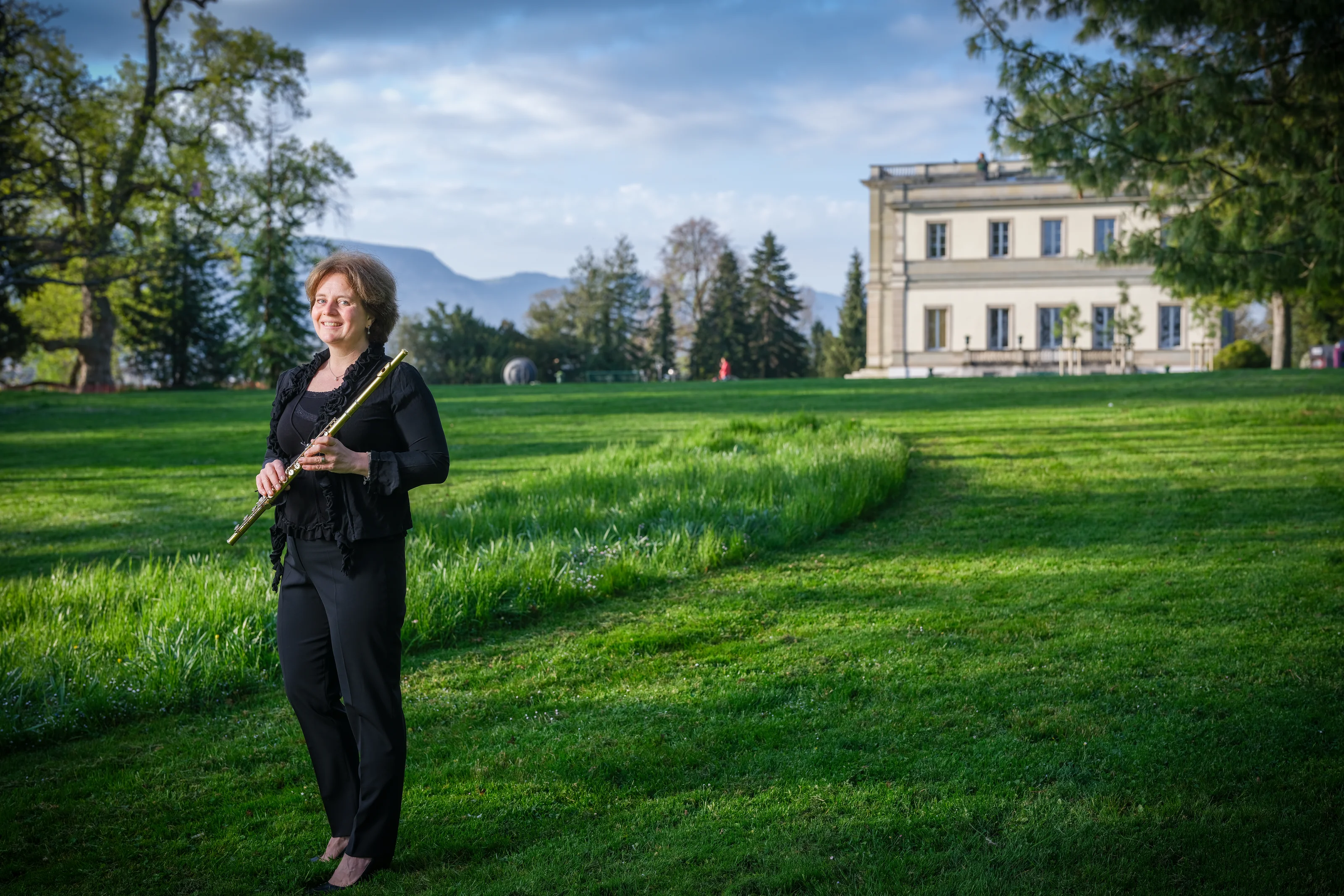
The deepest source of motivation and the most enduring goal of our work as performers are joy and emotion: tone colors and musical expression move us profoundly. It is this experience that inspires us, as children and adolescents, to take up an instrument. Added to this are the physical pleasure of making music, the exchange with peers, and the recognition of family and teachers – all of which awaken our ambition. At first, we play music for ourselves; gradually, however, the desire arises to transform this pastime into a vocation.
The further we advance on this path, the more essential the presence of the listener becomes: as our capacity for reflection grows, so too does our mission – to serve the music while conveying our most personal message to the audience.
It is along this path that I guide my students.
My aim is both to provide them with a solid and versatile foundation, and to support them in developing their own artistic identity. In this way, I hope to prepare them – without limiting their horizons – for the many possible career paths: orchestra, contemporary music, chamber music, solo performance, or teaching.
In my teaching, I place particular importance on cultivating, in equal measure, three fundamental pillars: technical mastery (instrumental and musical), musical understanding, and artistic personality.
Instrumental technique rests on refined bodily awareness. It encompasses posture, breathing, embouchure, sound quality, vibrato, dynamics, articulation, finger technique, as well as the playing techniques of contemporary music.
Musical technique, moreover, includes rhythmic security, polyphonic listening, intonation and tempo awareness, as well as solfège skills. These abilities form the indispensable foundation for faithfully realizing the musical text – the starting point of every individual interpretation.
In developing musical understanding, my goal is to make conscious and refine the natural sense of phrasing and expression that every student already possesses. This involves cultivating awareness of form, harmony, and motif, as well as sensitivity to meter and tone color, alongside the study of stylistic practice and performance traditions. I encourage students to immerse themselves ever more deeply in works, to decipher the intentions of composers, and to bring them into resonance with their own musical experience. With growing experience, their palette of expressive tools expands, as does their ability to interact musically with flexibility and responsiveness.
Finally, a central concern of my teaching is to nurture artistic personality. I encourage students to cultivate creativity and a spirit of experimentation: in designing their own concert programs, developing musical ideas, or exploring new practice methods. In this way, in a profession where personal initiative is increasingly essential, they can find their own voice, pursue their passion, and enrich our society through music.
The deepest source of motivation and the most enduring goal of our work as performers are joy and emotion: tone colors and musical expression move us profoundly. It is this experience that inspires us, as children and adolescents, to take up an instrument. Added to this are the physical pleasure of making music, the exchange with peers, and the recognition of family and teachers – all of which awaken our ambition. At first, we play music for ourselves; gradually, however, the desire arises to transform this pastime into a vocation.
The further we advance on this path, the more essential the presence of the listener becomes: as our capacity for reflection grows, so too does our mission – to serve the music while conveying our most personal message to the audience.
It is along this path that I guide my students.
My aim is both to provide them with a solid and versatile foundation, and to support them in developing their own artistic identity. In this way, I hope to prepare them – without limiting their horizons – for the many possible career paths: orchestra, contemporary music, chamber music, solo performance, or teaching.
In my teaching, I place particular importance on cultivating, in equal measure, three fundamental pillars: technical mastery (instrumental and musical), musical understanding, and artistic personality.
Instrumental technique rests on refined bodily awareness. It encompasses posture, breathing, embouchure, sound quality, vibrato, dynamics, articulation, finger technique, as well as the playing techniques of contemporary music.
Musical technique, moreover, includes rhythmic security, polyphonic listening, intonation and tempo awareness, as well as solfège skills. These abilities form the indispensable foundation for faithfully realizing the musical text – the starting point of every individual interpretation.
In developing musical understanding, my goal is to make conscious and refine the natural sense of phrasing and expression that every student already possesses. This involves cultivating awareness of form, harmony, and motif, as well as sensitivity to meter and tone color, alongside the study of stylistic practice and performance traditions. I encourage students to immerse themselves ever more deeply in works, to decipher the intentions of composers, and to bring them into resonance with their own musical experience. With growing experience, their palette of expressive tools expands, as does their ability to interact musically with flexibility and responsiveness.
Finally, a central concern of my teaching is to nurture artistic personality. I encourage students to cultivate creativity and a spirit of experimentation: in designing their own concert programs, developing musical ideas, or exploring new practice methods. In this way, in a profession where personal initiative is increasingly essential, they can find their own voice, pursue their passion, and enrich our society through music.
Die stärkste Motivation und das nachhaltigste Ziel unseres Tätigkeit als Interpretinnen und Interpreten sind Freude und Emotion: Klangfarben und musikalischer Ausdruck berühren uns. Diese Erfahrung motiviert uns als Kinder und Jugendliche, ein Instrument zu erlernen. Hinzu gesellen sich die Freude am physischen Erlebnis des Musizieren, der Austausch mit Gleichgesinnten, die Anerkennung durch Familie und Lehrende - unser Ehrgeiz wird geweckt. Wir musizieren zunächst für uns selbst – und entwickeln nach und nach den Wunsch, aus diesem Hobby unseren Beruf zu machen.
Je weiter wir auf diesem Weg fortschreiten, desto wichtiger wird unser Gegenüber: In dem Maß, in dem unsere Reflexionsfähigkeit zunimmt, wächst unsere Mission: gleichzeitig der Musik zu dienen und mit unserer ganz persönlichen Botschaft unser Publikum zu bewegen.
Auf diesem Weg begleite ich meine Studierenden mit Freude und Engagement.
Mein Ziel ist es einerseits, ihnen eine vielseitige und solide Grundausbildung zu vermitteln, andererseits, sie bei der Entwicklung ihres individuellen künstlerischen Profils zu unterstützen. Damit möchte ich sie zieloffen auf eine Laufbahn in den verschiedensten Tätigkeitsfeldern – Orchester, zeitgenössische Musik, Kammermusik, solistische Tätigkeit oder Lehre – vorbereiten.
In meiner Arbeit als Lehrerin lege ich Wert darauf, die drei Grundpfeiler des künstlerischen Schaffens gleichmäßig zu fördern: das (instrumentale und musikalische) Handwerk, das musikalische Verständnis und die künstlerische Persönlichkeit.
Das instrumentale Handwerk gründet in einem guten Körperbewusstsein. Es umfasst Haltung, Atemtechnik, Ansatz und Klangkultur, Vibrato, dynamisches Spektrum, Artikulation, Fingertechnik sowie die Spieltechniken zeitgenössischer Musik.
Musikalisches Handwerk bedeutet für mich darüber hinaus rhythmische Sicherheit, polyphones Hören, Intonations- und Tempobewusstsein und Solfègekenntnisse. Diese Fähigkeiten ermöglichen es, den Notentext getreu wiederzugeben, was den Ausgangspunkt jeder individuellen Interpretation bildet.
Bei der Entwicklung des musikalischen Verständnisses ist mir wichtig, den natürlichen Sinn für Phrasierung und Ausdruck, den alle Studierenden mitbringen, bewusst zu machen und zu verfeinern. Dazu gehören die Schulung des formalen, harmonischen und motivischen Bewusstseins sowie des Gefühls für Metrik und Klangfarben, aber auch die Auseinandersetzung mit Aufführungspraxis und Stilistik. Ich ermutige die Studierenden, immer differenzierter in die Werke einzutauchen, die Ausdrucksabsichten der Komponistinnen und Komponisten zu entschlüsseln und sie mit dem eigenen musikalischen Erleben in Einklang zu bringen. Mit wachsender Erfahrung vergrößert sich ihr Repertoire an Mitteln, mit denen sie ihren Ausdruck bewusst gestalten können, und ihre Fähigkeit, musikalisch flexibel auf andere einzugehen.
Ein zentrales Anliegen meiner Lehrtätigkeit ist schließlich die Förderung der künstlerischen Persönlichkeit. Meine Studierenden dürfen und sollen kreativ und experimentierfreudig sein beim Entwerfen eigener Konzertprogramme, bei der Entwicklung ihrer musikalischen Ideen oder beim Ausprobieren neuer Übemethoden. So können sie in einem Beruf, in dem es zunehmend wichtig ist, sich sein eigenes Tätigkeitsfeld selber zu schaffen, ihre eigene Stimme finden, ihn mit Leidenschaft ausüben und unsere Gesellschaft mit ihrer Musik bereichern.
La source la plus profonde de motivation et le but le plus durable de notre activité d’interprètes sont la joie et l’émotion : les couleurs sonores et l’expression musicale nous touchent. C’est cette expérience qui nous pousse, à l’enfance et l’adolescence, à apprendre un instrument. S’y ajoutent le plaisir physique de jouer, l’échange avec des pairs, ainsi que la reconnaissance de la famille et des enseignants – autant d’éléments qui éveillent notre ambition. Nous jouons d’abord pour nous-mêmes, puis naît peu à peu le désir de transformer ce loisir en vocation.
Plus nous avançons sur ce chemin, plus la présence de l’autre devient essentielle : à mesure que notre capacité de réflexion grandit, notre mission s’affirme – servir la musique, tout en transmettant notre message le plus personnel à notre public.
C’est dans cette démarche que j’accompagne mes étudiantes et étudiants.
Mon objectif est à la fois de leur offrir une formation de base polyvalente et solide et de les soutenir dans l’épanouissement de leur identité artistique propre. Je souhaite ainsi les préparer, sans cloisonner les horizons, aux multiples voies possibles : l’orchestre, la musique contemporaine, la musique de chambre, l’activité soliste, l’enseignement ou encore des activités transdisciplinaires ou de médiation.
Dans mon travail pédagogique, j’accorde une attention particulière à l’équilibre entre trois piliers fondamentaux : la maîtrise technique (instrumentale et musicale), la compréhension musicale et la personnalité artistique.
La technique instrumentale repose sur une conscience corporelle fine. Elle englobe la posture, la respiration, l’embouchure, la qualité du son, le vibrato, le spectre dynamique, l’articulation, la virtuosité digitale ainsi que les modes de jeu propres à la musique contemporaine.
La technique musicale inclut en outre la sécurité rythmique, l’écoute polyphonique, la justesse et le sens du tempo, ainsi que les connaissances de solfège. Ces compétences constituent la base indispensable pour restituer fidèlement le texte musical – point de départ de toute interprétation personnelle.
Dans le développement de la compréhension musicale, je cherche à rendre conscient et à affiner le sens naturel du phrasé et de l’expression que chaque étudiant possède déjà. Cela suppose aussi bien la formation de la conscience formelle, harmonique et motivique que la sensibilité à la métrique et aux couleurs sonores, sans oublier l’étude de la stylistique et de la pratique d’interprétation. J’encourage mes étudiantes et étudiants à plonger toujours plus profondément dans les œuvres, à en décrypter les intentions des compositrices et compositeurs et à les mettre en résonance avec leur propre vécu musical. Avec l’expérience, ils enrichissent leur palette expressive et gagnent en capacité d’interaction musicale souple et réactive.
Enfin, un objectif central de mon enseignement est de nourrir la personnalité artistique. J’invite mes étudiantes et étudiants à cultiver leur créativité et leur esprit d’expérimentation : dans la conception de programmes de concert originaux, dans l’élaboration de leurs idées musicales ou encore dans l’essai de nouvelles méthodes de travail. Ainsi, dans un métier où l’initiative personnelle est devenue essentielle, ils peuvent trouver leur voix, exercer leur passion et contribuer, par la musique, à enrichir notre société.
Hochschule Luzern

The Lucerne University of Music is the largest and most versatile music education institution in Central Switzerland, enjoying an excellent reputation well beyond the country’s borders. Its study programs range from classical music, jazz and folk music to composition, conducting, music theory, music pedagogy, research and music mediation.
An internationally renowned faculty teaches around 600 students from all over the world. The university sees itself as a vibrant artistic center, where tradition and innovation are equally nurtured. Its activities span historically informed performance, contemporary music, improvisation, and interdisciplinary projects combining theater, dance, and media arts.
Firmly embedded in the city’s cultural life, the Lucerne University of Music plays a key role in promoting artistic diversity and advancing the musical landscape of Lucerne and Switzerland through concerts, festivals, research projects, and international collaborations. Since 2020, it has been housed in the new campus of the Südpol Cultural and Community Center, whose modern facilities provide ideal conditions for study, teaching, and artistic projects.
Die Hochschule Luzern – Musik ist die größte und vielseitigste musikalische Ausbildungsstätte der Zentralschweiz und genießt weit über die Landesgrenzen hinaus einen hervorragenden Ruf. Ihr Studienangebot reicht von Klassik, Jazz und Volksmusik über Komposition, Dirigieren und Musiktheorie bis hin zu Musikpädagogik, Musikforschung und Musikvermittlung.
Ein international renommiertes Dozierendenteam betreut rund 600 Studierende aus aller Welt. Die Hochschule versteht sich als lebendiges künstlerisches Zentrum, in dem Tradition und Innovation gleichermassen gepflegt werden. Das Spektrum reicht von historisch informierter Aufführungspraxis bis zu zeitgenössischer Musik, von Improvisation bis zu interdisziplinären Projekten mit Theater, Tanz und Medienkunst.
Fest im kulturellen Leben der Stadt verankert, prägt die Hochschule Luzern – Musik mit Konzerten, Festivals, Forschungsprojekten und internationalen Kooperationen maßgeblich die Musiklandschaft in Luzern und darüber hinaus. Seit 2020 ist sie im Neubau des Kultur- und Begegnungszentrums Südpol beheimatet, dessen moderne Infrastruktur ideale Bedingungen für Studium, Lehre und künstlerische Projekte bietet.
La Haute École de Musique de Lucerne est le plus grand et le plus polyvalent établissement de formation musicale de Suisse centrale et jouit d’une excellente réputation au-delà des frontières nationales. Son offre de formation couvre la musique classique, le jazz et la musique populaire, ainsi que la composition, la direction, la théorie musicale, la pédagogie musicale, la recherche et la médiation musicale.
Une équipe d’enseignants de renommée internationale encadre quelque 600 étudiant·e·s venus du monde entier. L’école se présente comme un centre artistique vivant, où tradition et innovation se conjuguent harmonieusement. Ses activités vont de l’interprétation historiquement informée à la musique contemporaine, de l’improvisation à des projets interdisciplinaires intégrant théâtre, danse et arts médiatiques.
Bien implantée dans la vie culturelle de la ville, la Haute École de Musique de Lucerne contribue de manière décisive à la diversité artistique et au développement de la scène musicale lucernoise et suisse grâce à ses concerts, festivals, projets de recherche et collaborations internationales. Depuis 2020, elle est installée dans le nouveau campus du centre culturel et de rencontre Südpol, dont l’infrastructure moderne offre des conditions optimales pour l’étude, l’enseignement et les projets artistiques.
MEISTERKURSE
Since its founding in 2012, the Meisterkurse und Sommerserenaden Rheinau Association has been dedicated to supporting young musical talents. Through intensive tuition with renowned university professors—all distinguished experts in their fields as well as soloists with leading European orchestras—the participants are given the opportunity to deepen and broaden their musical education in a lasting and meaningful way.
Complementing the masterclasses, the Sommerserenaden Rheinau were established as a small but distinguished festival. Over the years, the festival has carved out a firm place for itself in Zurich’s wine-growing region and continues to delight a loyal audience.
The Meisterkurse und Sommerserenaden Rheinau take place every August and are aimed at university-level music students, candidates preparing for entrance examinations at conservatoires and universities of music, as well as students attending specialised music high schools. I teach a maximum of 12 students over the course of one week.
Der Verein Meisterkurse und Sommerserenaden Rheinau fördert seit seiner Gründung 2012 junge Musiktalente. Durch intensiven Unterricht bei renommierten Hochschuldozierenden – allesamt herausragende VertreterInnen ihres Fachs sowie SolistInnen führender Europäischer Orchester – wird die musikalische Ausbildung der Teilnehmenden nachhaltig vertieft und erweitert.
Als Ergänzung zu den Meisterkursen entstanden die Sommerserenaden Rheinau, ein kleines, aber feines Festival, das sich im Zürcher Weinland einen festen Platz erobert hat und ein treues Stammpublikum begeistert.
Die Meisterkurse und Sommerserenaden Rheinau finden jedes Jahr im August statt und richten sich an Studierende, KandidatInnen für Aufnahmeprüfungen an Musikhochschulen und MusikgymnasiastInnen. Ich unterrichte max. 12 Studierende während einer Woche.
Depuis sa fondation en 2012, l’Association Meisterkurse und Sommerserenaden Rheinau s’engage en faveur de la promotion de jeunes talents musicaux. Grâce à un enseignement intensif dispensé par des professeurs de hautes écoles de musique renommés – tous éminents spécialistes de leur discipline et solistes au sein de grands orchestres européens –, les participants ont la possibilité d’approfondir et d’élargir durablement leur formation musicale.
En complément des masterclasses sont nées les Sommerserenaden Rheinau, un festival à taille humaine, raffiné et de grande qualité, qui s’est solidement établi dans la région viticole zurichoise et séduit aujourd’hui un public fidèle.
Les Meisterkurse und Sommerserenaden Rheinau ont lieu chaque année au mois d’août et s’adressent aux étudiants en musique, aux candidats préparant les examens d’admission aux hautes écoles de musique ainsi qu’aux élèves des gymnases à orientation musicale. J’enseigne à un maximum de 12 étudiants pendant une semaine.